Why Smart Business Owners Treat Their Website Like a Closer, Not a Marketer
Many small business owners invest in a website expecting it to flood their inbox with new leads overnight. But here’s the truth: your website isn’t a lead generator—it’s a lead converter.
Without a marketing engine behind it, even the most beautiful website will sit quietly in the dark corners of the internet, waiting for someone to stumble upon it.
If you want your website to work for your business, you need two things:
- A strategy to get people there, and …
- A clear, professional site to turn visitors into customers.
TL;DR: A website’s primary role is to convert visitors into leads—not to generate traffic. Marketing efforts like SEO, ads, and social media drive people to your site. Once there, a well-designed website builds trust, communicates value, and guides users to take action like calling, booking, or buying.
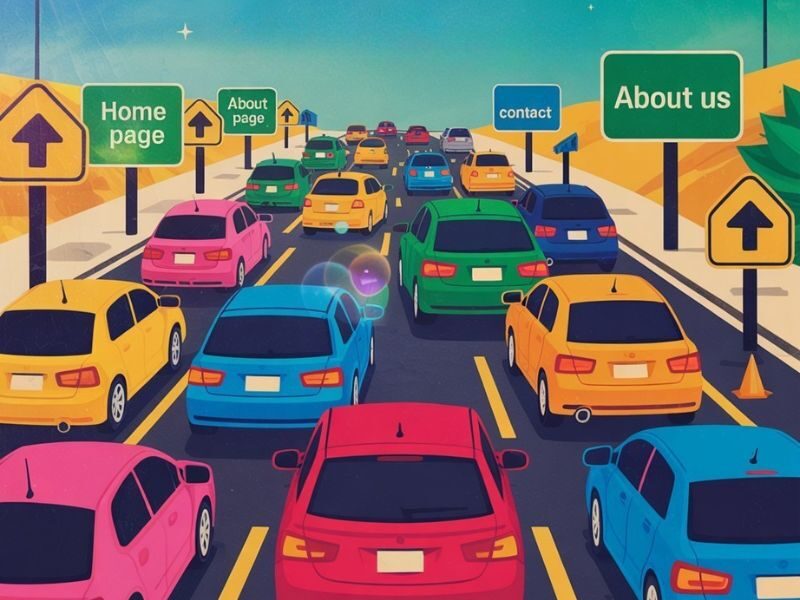
Let’s break down the difference between conversion and visibility—and how to make sure your website is built for the role it’s meant to play.
A website doesn’t create leads—it helps you convert them.
It’s where curious people land after hearing about you elsewhere.
There is nothing inherent about a website that grabs views. While a targeted SEO strategy can make a difference, it requires time and money to tweak a website’s SEO, and that only works if enough people are searching for exactly what you offer, where you offer it—otherwise Google has no one to send your way.
So how do we get people to your online door front?
Traffic comes from marketing, not just having a website.
SEO is necessary and helpful, but if you really want to drive leads to your business: Ads, social media, referrals, and directories are what drive people to your site.
And, you need those leads! Nearly 80% of consumers look up businesses on their phones before they’ll enter a brick and mortar store — and even more search up service providers online before making an appointment.
But having a website—and driving people to it—doesn’t result in conversions.
A bargain-basic website with no strategy is like opening a store with no signs.
If no one knows you’re there, they won’t show up.
And if they can’t easily navigate your offer or your site resembles a dead-end, dingy showroom of lost chances—they won’t stick around.
Conversion is about trust, clarity, and user experience
A well-designed site builds confidence and guides visitors toward taking action (like calling, booking, or buying).

This isn’t only important for people. Search engines, and Google in particular, look for certain indicators on business websites that mark them as legitimate. Without those markers, your potential customers will be served the websites of any close competitors who have them first.
You need both visibility and professionalism.
Visibility brings people in. A strategic website shows them they’re in the right place, and converts that good will into new business for you.
Fortunately, there are conversion strategies for every approach, from inviting your leads to get in touch via a simple contact form, to masterfully blueprinted, lucrative marketing funnels.
But even the best sales funnel won’t work if there’s no external marketing driving traffic to the website—and all that visibility is wasted if the website isn’t ready to convert it.